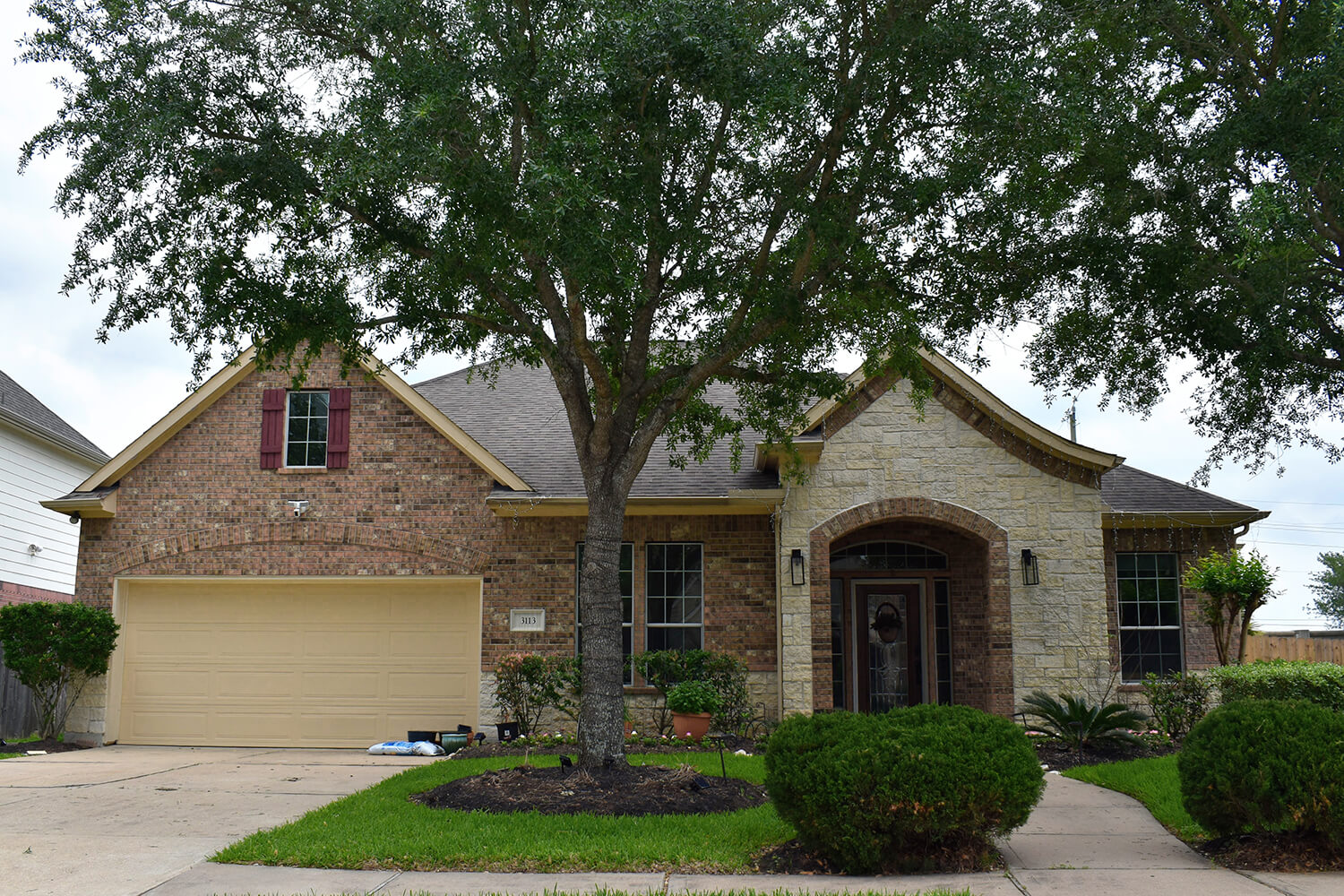
We have a vacancy in one of our properties that is managed by a property manager.
It’s located in Kelowna. We normally try to get out to see our properties as soon as a vacancy comes up but Kelowna is not a day trip from Vancouver Island where we lived. So, we planned a trip right after the Investor Forum to check everything out. Since I knew we were going there in a week or so, I didn’t check up on the ads for the property when they got posted at the start of November.
When we arrived at the property in Kelowna, the vacant unit was in ok condition. We decided to do a few improvements to make it more competitive with the new condos (there’s a massive amount of new condos on the market in Kelowna still – making rentals still a little tough there). The condition the unit was in, however, shouldn’t have been keeping tenants from renting it. So then I started to ask more questions.
So when I went through this with our PM and discovered that they had only one call and one showing – and the call came from a friend of the downstairs tenant – alarm bells started to ring loudly in my head as I started to drill the PM about the ads. Where are they? What’s the rent? What are the pictures like?
He gave me all the right answers but I knew something had to be wrong so I set out to find the ads myself. 45 minutes later I still hadn’t found the ad in the main rental site in Kelowna. Frustrated and frazzled I finally looked in the condo section (I’d been looking in houses and partial houses for rent given that this is a main floor of a house for rent). Inside the 340+ condo rental ads there was our HOUSE FOR RENT!
Gee … think that might have had a reason people weren’t calling? And don’t get me started on the pictures … dirty dishes in the sink, rumpled sheets and trash around the unit … no excuse for such bad pictures when the unit is now vacant!!
Our awesome real estate agent in Kelowna (Brenda Bachmann) grabbed her wide angle lens camera and shot some fabulous photos and I set to work creating new ads. The unit is not rented yet but they’ve had more calls in a week than they did in the first 2 weeks of the month AND they have begun to show it more.
The market in Kelowna is slow right now. The time of year and the number of condos for rent are making it tough to fill rentals but bad ads were not doing us ANY favours at all. The PM had written it off because of the above issues and didn’t bother to check where his assistant had posted the ads. We only lost a few weeks by not catching this issue sooner but those are two weeks that might have filled it for December versus January.
So … I share this with you in the hopes that you are quicker to follow my own advice than I was!! And interestingly, a couple of nights ago I interviewed Multi-Family Investing expert Pierre-Paul Turgeon for one of our group coaching calls with our Rev N You Insiders and he indicated that not staying on top of the advertising for vacant units is one of the biggest mistakes he’s made in the past too. It’s a big issue for all investors – single family and apartment building – and one I hope you pay close attention to.
On another note … if you’re looking for human coaches that care about your investing success we have a couple of coaching programs starting soon … our Bootcamp class begins December 1st. It’s perfect for the rookie investor that wants to FINALLY get that first deal under their belt. We take you by the hand and walk you through all the steps, details and pitfalls to avoid. Get all the details on a webinar replay while the spaces are still available: http://www.realestatemillionairecourse.com/register
I also wanted to let you know that we still have a couple of spaces in our VIP Mastermind group for 2012 available. This is by application and interview only as we only take 5 people. For those 5 people we completely open our doors. We teach you EVERYTHING we do – including our rent to own system. We’ll even help you troubleshoot your own vacancy issues if you have them and work with you to write ads for your own rentals. We’re in your corner 100% for 2012 with our contacts and resources totally open to you – whatever you need to get to your goals we try to help you find. Plus you’ll be there to support and encourage each other for the year in our cozy little group of action taking investors. Should be a FANTASTIC year and we can’t wait to get it started. It’s ideal for the folks who’ve done a deal or two and want help creating their business systems and building a solid foundation for their future as an investor. If you’re looking for someone to have your back and get you really rocking and rolling in 2012 reach out to us. It’s by application and interview only so email Candace at info (at) revnyou.com if you are interested.
The Vancouver Investor Forum was a hit! I’ve received dozens of emails from attendees saying that they learned a lot, had some fun, and were really impressed with how ‘real’ and ‘easy to approach’ all of the speakers were. Love those kind of emails. If you missed the event, you really did miss a fantastic array of speakers with so much to share.
I was hopping for the weekend with my talk on Day 1 and MC duties on Day 2 so I missed a lot of the sessions, but here are my 3 favourite thoughts from the weekend and from what I caught (plus some pictures because I know you love pictures).
My favourite talk of the weekend was from our dear friend Tahani Aburaneh. She shared a bit about her story and how she came to Canada at the age of 15 – a brand new bride. The responsibility of taking care of her family and her new husband was a big weight to carry on her shoulders at such a young age. She said that she became an adult in an instant.
My favourite take away from her talk was almost a side comment she made as she shared her story of creating a successful real estate brokerage. When she was out looking for her first listing she cold called, knocked on doors and busted her butt for SIX MONTHS to get her first listing. She said “I don’t know why it took so long – maybe it was my accent? I talked different.”
All she knows is that she heard a lot of NO’s before she FINALLY got her first listing. Her business grew from there into a multi-million dollar company. She said “most people give up too soon.”
I thought to myself, “I wonder where I give up too soon?”
And that is the question I’ve brought back to the office to figure out. I work hard and I push hard but I KNOW there are places where I give up too soon and I bet you probably do too. Had she given up before that first listing she may not have created the successful business she has today, or be coming out with a soon to be best selling book (it’s coming out in January!), or be into real estate development (she has some cool potential projects on the horizon).
The Investor Forum had Western Canadian Investor of the Year Awards. We heard some really impressive stories from the winners … people changing neighbourhoods to people building businesses in five years or less.
Notably every single winner thanked a coach. Most people belonged to at least one investing club or organization. They had worked hard to surround themselves with like minded people.
Two of our clients, Kelly and Jeff, were up for Best New Investor. They have both worked hard this year AND have made an effort to surround themselves with like minded people (like us and our other coaching clients).
The folks who are out there making it happen are not doing it alone. It’s possible to figure it out on your own but it is A LOT OF WORK. It’s much easier to team up with someone who has done what you want to do and follow their system.
We don’t do it alone either. After years of fumbling around and making a ton of mistakes we’ve realized the value of investing in a great coach. For the last three years we’ve been investing a lot of money into courses, coaching and surrounding ourselves with great folks. The results have come back to us 10 fold financially and with massive fulfillment and awesome friendships.
One of our coaches we mention all the time: Greg Habstritt. This event was pretty cool because not only was Greg one of the keynote speaker but 4 of his VIP coaching clients (these are the people that pay Greg big bucks for very personal and high level coaching and masterminding) were also keynote speakers.
Do you think it’s a coincidence that the folks that have invested in high level coaching like Greg’s program are the same folks who are invited to speak in front of 300+ paying attendees at a prestigious real estate event? I don’t …
I think it’s because they’ve been following Greg’s teachings for several years AND because they are being held accountable that they’ve elevated their business so quickly and effectively as to be experts worthy of the stage at the event. (By the way – I am counting myself as Greg’s client even though it’s Dave that is the official member. I feel like an honourary member of the group most days!! The picture to the left is of Wade Graham, another VIP coaching member & my co-host for Day 2, Greg Habstritt, Me, Dave Peniuk and Kourosh Assef, Greg’s Business Partner).
“How do you make $100,000 in Detroit?” Thomas Beyer asked me over dinner after the event was over Sunday night.
“I don’t know – how?”
“Buy an apartment building for $600,000” he laughed.
I was running around like crazy on Sunday as MC for Room #2 at the Forum so I missed part of Thomas’ presentation but I caught enough to know that I have mad affection for the lessons this man has to share with investors out there.
He’s made mistakes and he has no problems sharing them so that others may learn from them. His 2007 or 2008 purchase (I can’t remember) of a Detroit Apartment building is no exception.
But the lesson he shared is one that was reiterated in the last panel of the day as well, and that is:
Price is not that important. Value is what you get. Price is what you pay.
When you buy ANYWHERE, but especially in the US these days where many people are screaming that houses are ‘on sale’, you can’t focus on the price you’re paying because cheap is usually cheap for a reason. Look at what it’s actually worth. What kind of cash flow are you going to get? What are other properties in the area selling for? What kind of tenants will the property attract? What kind of work will the property need to be in good condition?
If you were at the Forum, what was your big take away? I missed so many of the talks I would love to hear what you took away from the event??
One of the most popular articles on our website is an article discussing multi-family versus single family residential investment. We are focused on single family homes. We like the liquidity and simplicity of that investment. But there are a lot of reasons to like mulit-family too. A lot of people are drawn to the fact that you can qualify for financing based on the merits of the property not your own finances and the reduced risk of having multiple units to carry you through if there is a vacancy with multi-family property.
Since we don’t have much expertise to help you sort through the challenges surrounding mult-family investing – we brought in an expert who is eager to help! Here’s a guy who owns apartment buildings AND worked behind the scenes at CMHC to decide whether other people would get financing on their buildings. He knows A LOT about investing in multi-family buildings … and today he’s sharing insights on why cash flow matters more than cap rates – ESPECIALLY when you’re dealing with CMHC. And he’s a friend and colleague of ours … someone we’re proud to introduce you to.
Cash flow, as for any real estate investment is the ultimate goal. A good cash flow is what’s going to carry you through the good times, but especially through the bad ones. There’s a lot of uncertainty in the world’s economy and no one knows what can happen…
In the rest of my Multi-Family Blueprint (pickup a copy by clicking the link) we cover how value is derived from the property’s annual Net Operating Income. Now we are ready to take a closer look at the financial analysis that’s involved in more detail. Of course, if the data supporting the NOI you arrive at is unreliable, so is the value of the property. The most important thing to remember in this section is that every figure used in the cash flow analysis and financing application must be verified and supported with appropriate documentation. Let’s start with the income.
The property must generate a sustainable and a steady income stream for the investor. The bank and CMHC will also be looking for concrete evidence of that income stream in your financing application. As value is directly derived from the property’s current income (NOI), and not from projected income, it goes without saying that your rental income needs to be maximized. In other words you must ensure that your rents are at least at market level or even higher if it’s sustainable based on specific market conditions and what’s permitted by the relevant landlord tenant legislation in that market. Some jurisdictions (Provinces) have stringent rent increase ceilings.
In terms of required documentation for completing your due diligence and for financing purposes, I refer you to the resource list at the end of my report (you can download the complete Blueprint report here) which contains the website address for CMHC’s “Minimum Documentation Checklist”. In a purchase transaction, the vendor will supply the bulk of these documents to you.
On the one hand, the lender needs to establish the current income to determine the current value, but also the historical income trend as well to show how the property performed in the last 2 or 3 years. The point here is to demonstrate the stability of the income stream, hence confirm the value of the property. Accordingly this means obtaining from the vendor the property’s operating (income and expense) statements and rent rolls for the last three years. Make sure to have a current rent roll, signed and dated by either your property manager or the owner. If there is ancillary income such as laundry and/or parking, be sure to include this in the revenue.
There is one exception when CMHC will consider the property’s “projected rental income”, that is when rental increase notices have been given to tenants and the increases are effective within 3 months of the loan approval. Copies of the rental increase notices must however be provided to CMHC in support of the financing application and clearly indicate when the date when increases are effective. Once again, it would help you minimize your risk and if you included this information in your application you’d look pretty smart! The challenge is the vendor may not be willing or even able to give you that much information.
On the expense side, you’ll want copies of property taxes, insurance and utilities invoices for the most recent 12-month period. Here again, my advice is for you to attempt to get those for as far back as 3 years in order to enable you to develop a sound knowledge of the property’s historical expense profile.
For items such as property taxes, insurance and utilities (heat, water & sewer, and power), the lender will use the actual figures based on the operating statements and invoices provided to you by the vendor. For expenses such as wages & salaries (for caretaker), repair and maintenance (known as R & M), property management and often advertising, lenders and CMHC mostly will use industry expense benchmarks. These benchmarks are estimated on a “Per Unit Per Annum‟ (PUPA) basis and are specific to geographic areas. Your lender or broker should be familiar with those benchmarks. If not, they can contact CMHC‟s multifamily underwriting department to obtain them. What they will receive is a range of expense benchmarks for each category. My advice here is that it’s fine to use these benchmarks for financing purposes, however for your own operating budget I would rely on the actual expenses you have extracted from due diligence documents (historical operating statements).
In Table 3 in the report, I give you a sample cash flow analysis with very realistic numbers, at least in my market, for a “stabilized” property, meaning it is assumed that all major improvements have been completed. Appreciate that operating expenses will vary based on construction type, age and condition of the property. I want to point out to you a very critical number, that of the “operating expense ratio” which in my example sits at a reasonable 44.33% of EGI. The operating expense ratio is calculated by dividing the total operating expenses ($85,500) by the EGI ($192,850). The operating expense ratio may vary between 40% and 50% generally. Any property with a ratio below 40% should be analyzed very carefully to ensure nothing was forgotten in the analysis. For my properties, I follow the operating expense ratio on an on-going basis to gauge the efficiency of my properties as any savings, especially in utility expenses, automatically leads to increased revenue (NOI) and thereby increased value of my property. I give you a personal example of that further below.
Once you’ve determined with certainty your income and expenses, the difference between the two is the NOI. You’re now in a position to determine what the debt coverage ratio (DCR) is.
Investors of small income properties (1 to 4 units) eventually get “maxed out”, or reach their credit limit because banks use the borrower‟s gross annual income to calculate their total debt service ratio (TDSR).
In the report, I’ve included a sample cash flow analysis spreadsheet for a 20-unit building with realistic numbers, which represents “a very good deal” as the property generates an excellent annual cash flow of $46,719 per year and has a debt coverage ratio (DCR) of 1.77. The DCR is calculated as follows:
A different way of looking at the above example is to say that the property generates an annual income stream (NOI) 1.77 times the annual mortgage payment.
CMHC’s mortgage insurance guidelines for DCR requirements are as follows:
NOTE: CMHC’s guidelines are precisely that, guidelines only and they’re not cast in stone. CMHC has complete discretion to modify these guidelines to fit the specific risk profile of every deal on a case-by-case basis. Accordingly, the same applies to the DCR requirement, which can be increased if necessary to mitigate the overall risk of the deal. I have underwritten loans in challenging markets where the DCR requirement was increased on an ad hoc basis above the published DCR guidelines because of the added perceived risk.
Cap rates are used as benchmarks ONLY in determining whether the value of the property fits in the range values observed in recent transactions. It‟s simply an estimation of current value. That’s all! My best advice with regards to Cap rates is:
The reason I’m saying this is because at the end of the day, you don’t get to choose the Cap rate. The bank and/or CMHC do and there’s nothing you can do about it. For financing purposes, however, you need to know what are the prevailing market cap rates in your market to enable you to run your initial numbers. If you don’t have any data on Cap rates, the best way to get this information is to ask your mortgage broker or lender to supply you with those. If the deal is going to be CMHC-insured your broker / lender can call CMHC’s multifamily underwriting department and ask for the current prevailing Cap rates.
WARNING!
When asked for prevailing Cap rates in any given market, CMHC will not commit to any specific Cap rate until it has had a chance to analyze the actual deal supported with relevant documentation and developed a specific risk profile (4 risk factors). What they’ll likely give you is a range of Cap rates that CMHC has been using recently in that market. The problem with that is that the range you are going to get will most likely be very wide that it’s almost a futile exercise. In that situation, consider picking a Cap rate in the middle of the range you’ve been provided to run your numbers. Be prepared if CMHC ends up using a higher rate than what you expected, which will result into a lower loan amount for you.
One last comment I want to make on Cap rates is that investors also consider them to be a “market risk indicator”. In high-risk markets investors will expect investment assets, such as multifamily properties, to be valued using a higher Cap rate that translates into a lower price as a means to mitigate their investment risk. In this regard, CMHC’s approach to the market risk is no different. For example, when underwriting properties in smaller or remote northern markets that may be considered riskier CMHC will tend to utilize a higher Cap rate to reflect the added level of risk.
Image Credit:© Briangoff | Dreamstime.com
Happy Monday!!
It’s a big week around our office because we’re now full steam ahead working on our latest acquisition: an old character home renovation project.
We took possession on Wednesday and we’ve already ripped off four layers of roofing, pulled out the toilets, tubs and started repairing the floors. Over the next couple of months we’re going to change out the stucco for some brightly coloured HardiePlank siding, rip down the ugly rat caves (old garage and sheds), and give this home a whole new look. We’ll be putting it into our rental pool while we evaluate all the options for the lot (because the highest and best use of this particular lot is not a single family home).
It’s a fun and challenging project – and it’s got us hopping! (In the picture to the left Dave with our carpenter Wes inspecting the windows. We’re replacing all windows and we’re a little scared of what we’re going to find when the windows come out … Wes was just explaining the details to Dave when I took this picture).
At the same time we continue to hunt for other homes for our rent to own program. We looked at 11 properties on Saturday. We’re making an offer on one and checking on a property that we’ve been watching for almost a year. We really are looking for the needle in a haystack so we have to patiently wait and keep working!
In between all that we’re also putting the finishing touches on our upcoming Joint Venture Presentation Workshops. We’re pretty excited because we’ve been getting regular emails from attendees of the last couple of workshops saying things like “Thank you for helping me figure out how to talk up a storm about real estate without feeling like a slimy salesperson.” Of course the best is when someone like Bill, a Toronto attendee, found me at a different event I was speaking at and gives me a big hug and smile and says “I’ve done one JV now and I’m working on the next one!!”
Anyway – if you’re interested in attending one of the workshops you can get the details here: Joint Venture Presentation Workshop
As of today there are just a few seats left in the Toronto one but still lots of space in the Vancouver workshop.
Now – for today’s post – I have a suggestion for a small change you can make to dramatically improve the results you’re getting when you’re speaking with people about investing in your deals.
Enjoy … and if you give this little tip a try let me know how it works out for you! And of course, your tips and suggestions are welcome in the comments below too!!!